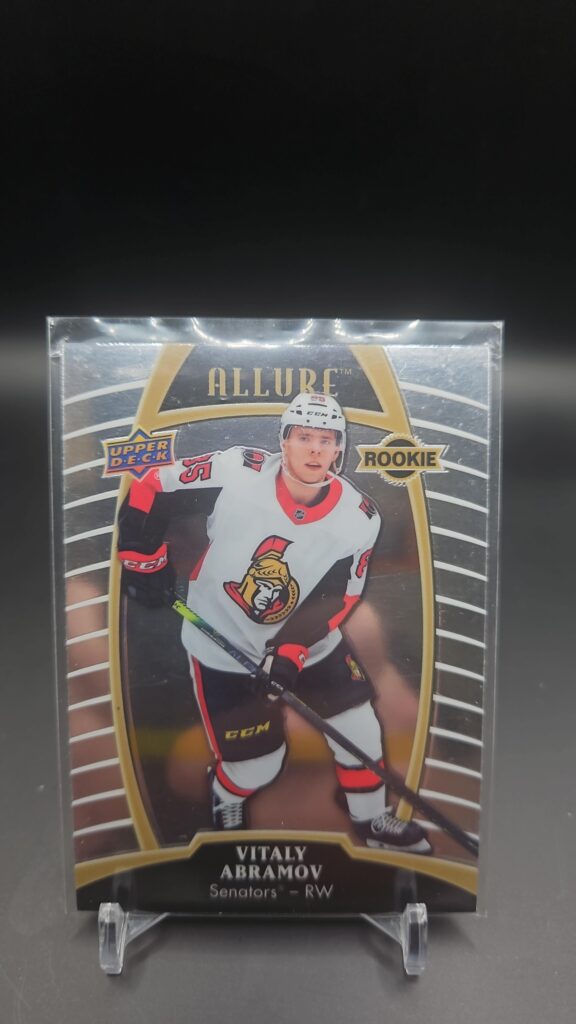
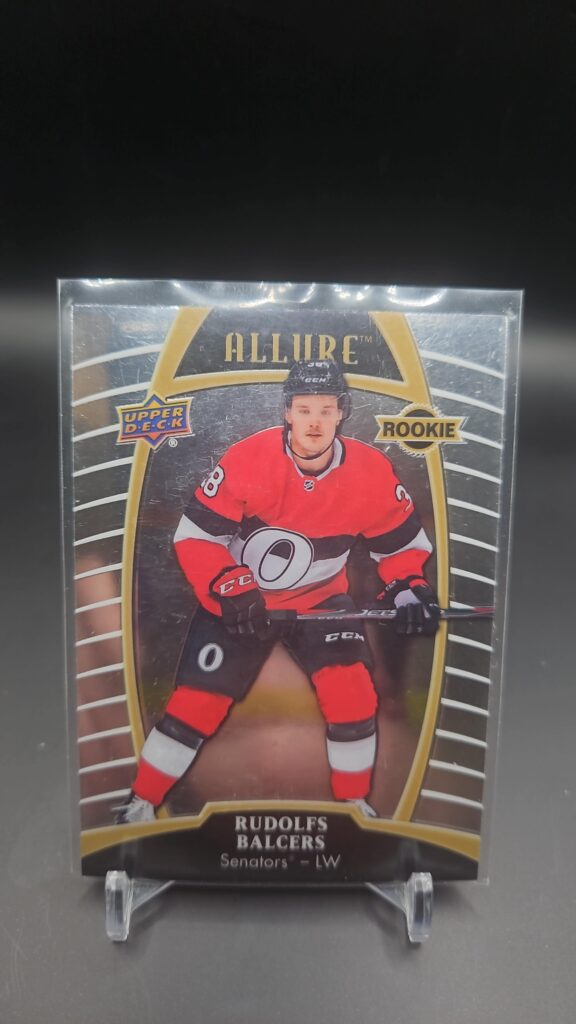
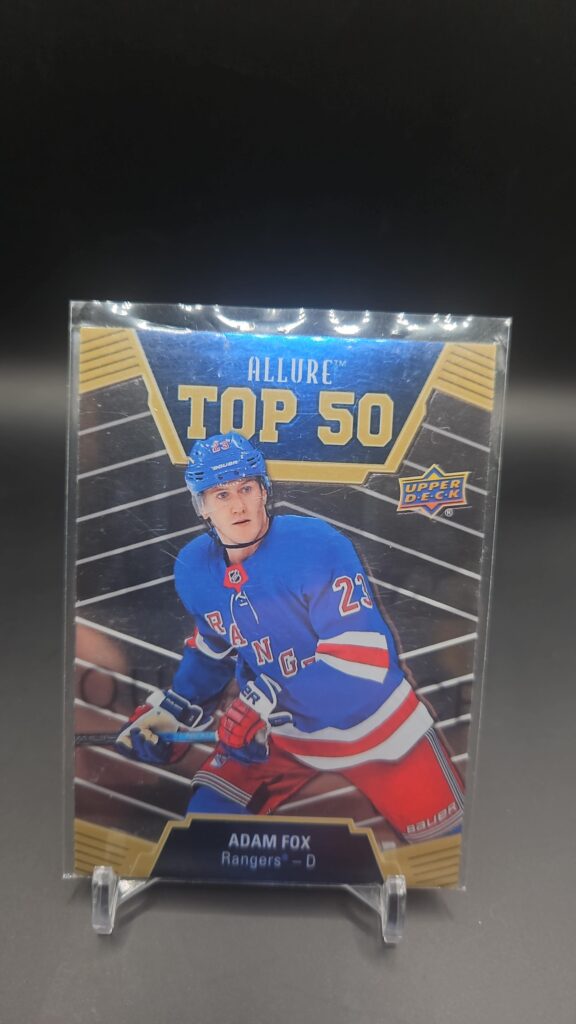
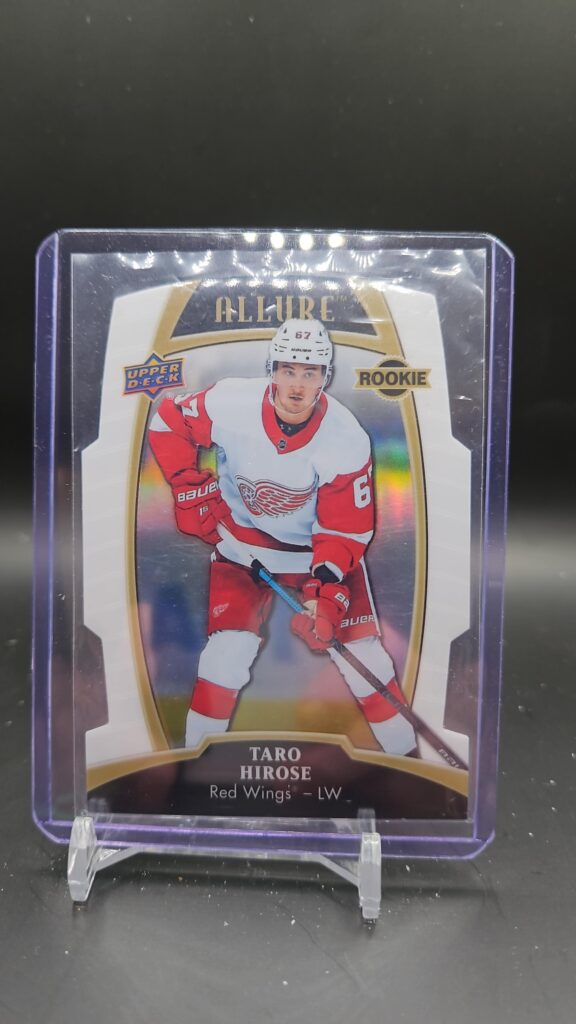
Upper Deck Allure Hockey Singles
Upper Deck Allure Hockey Singles
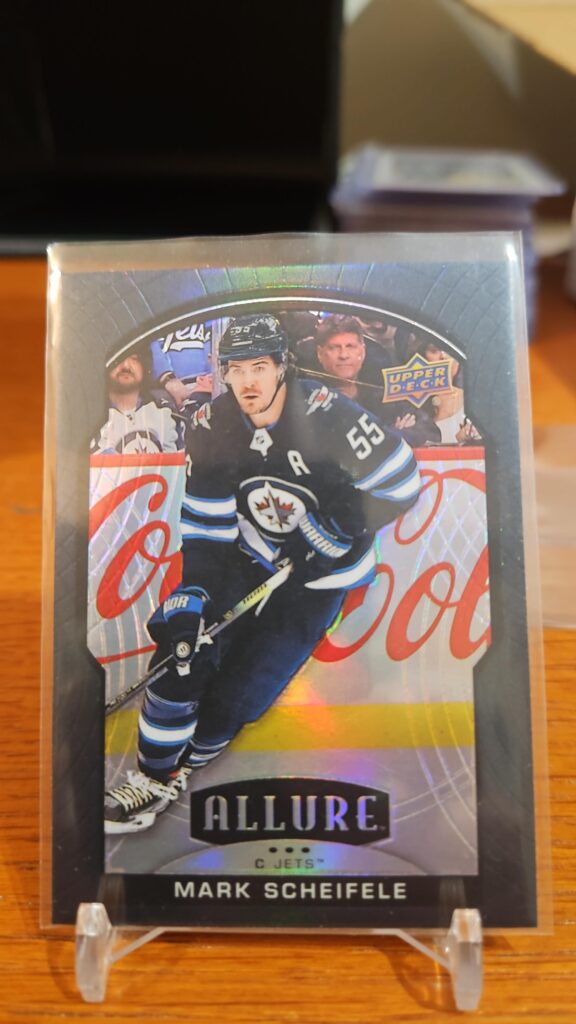
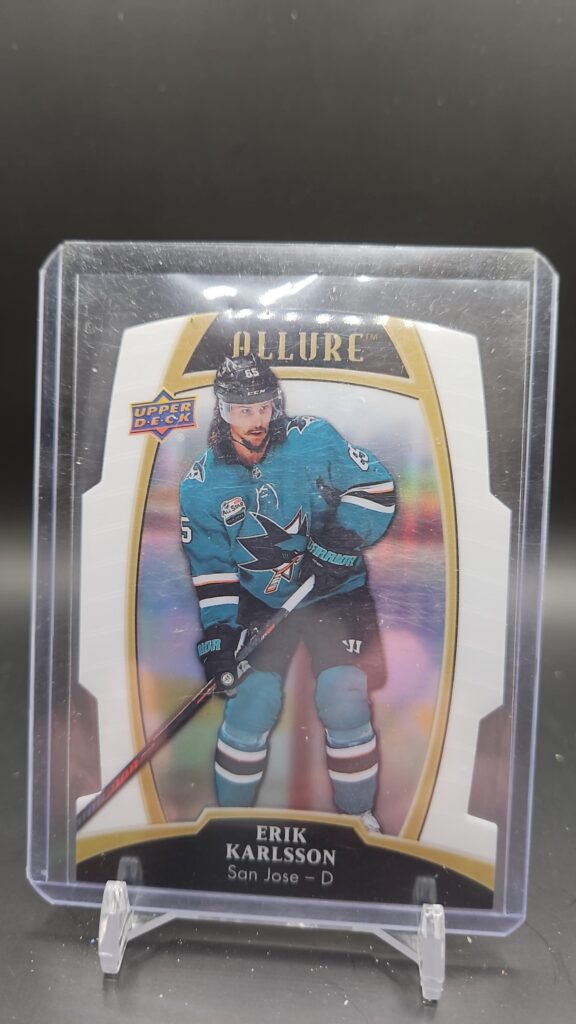
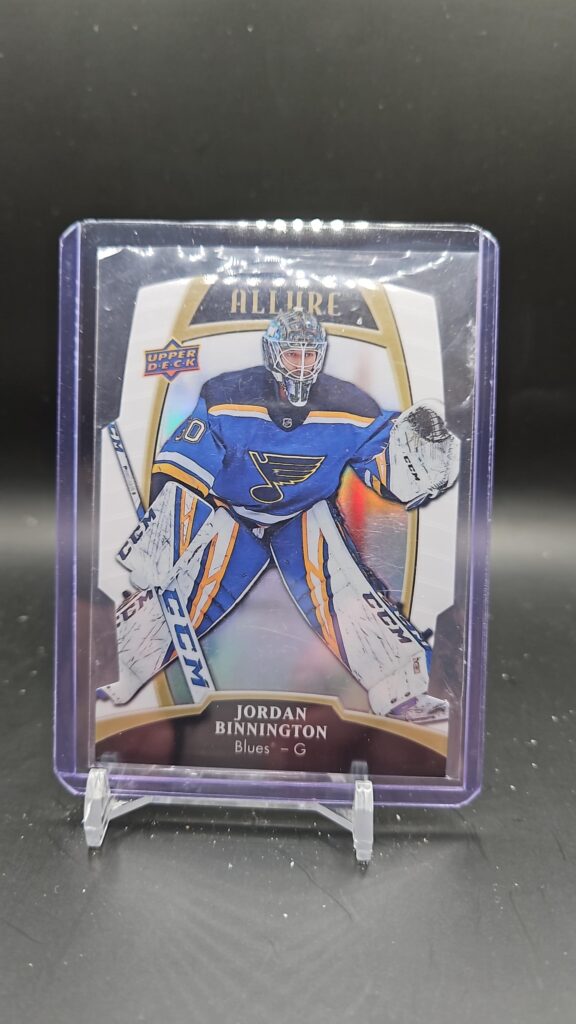
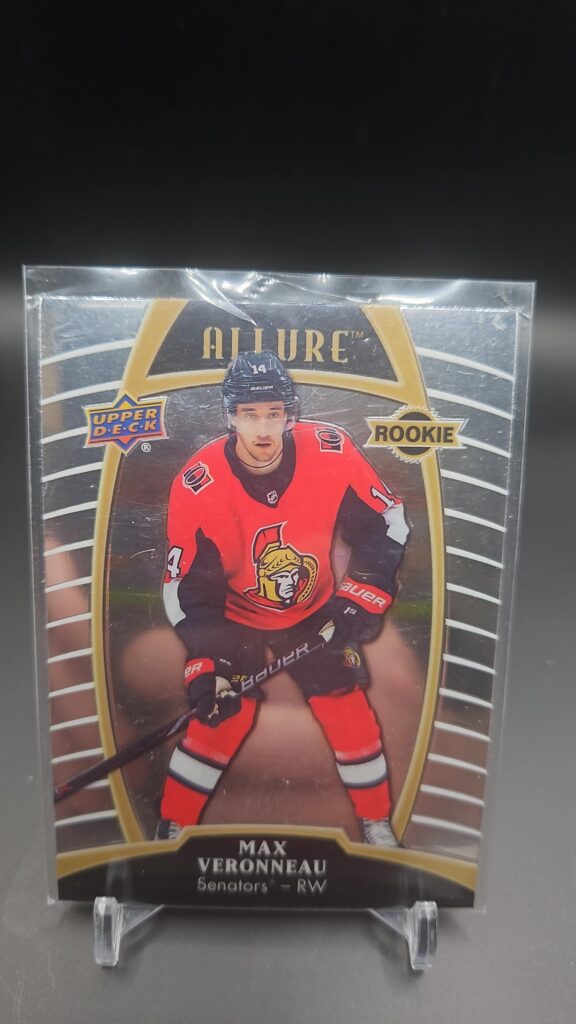
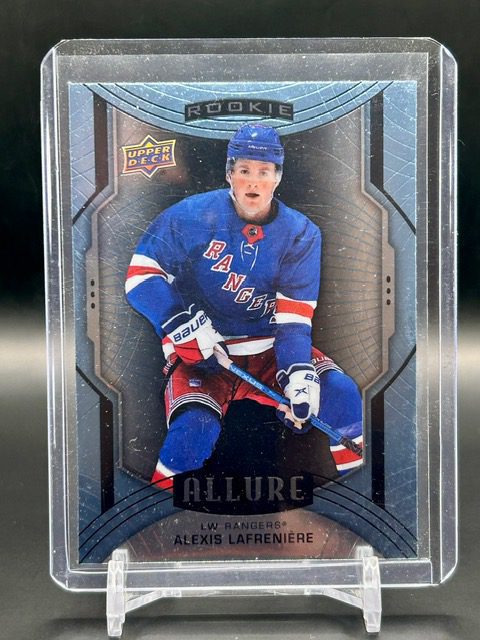
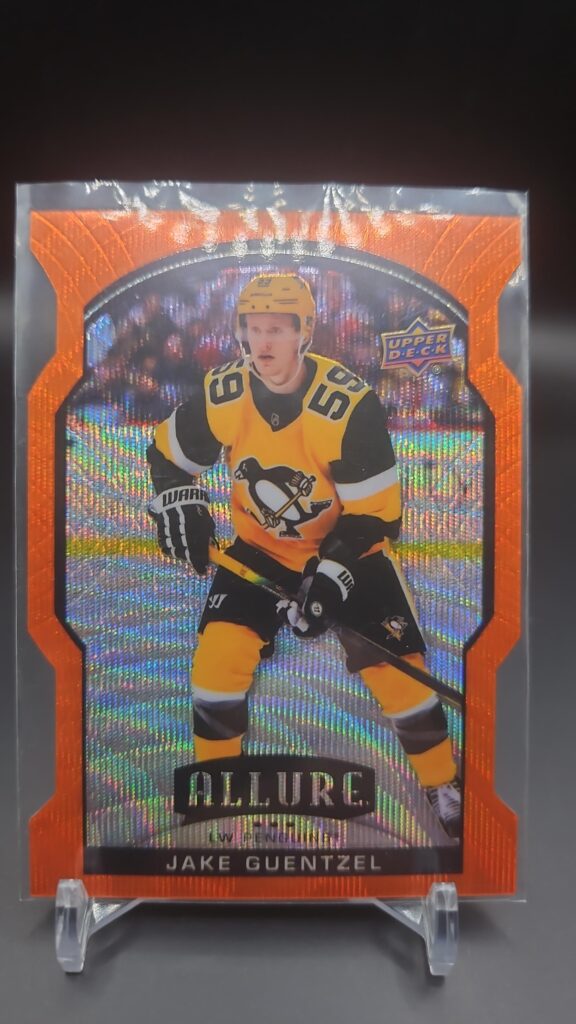
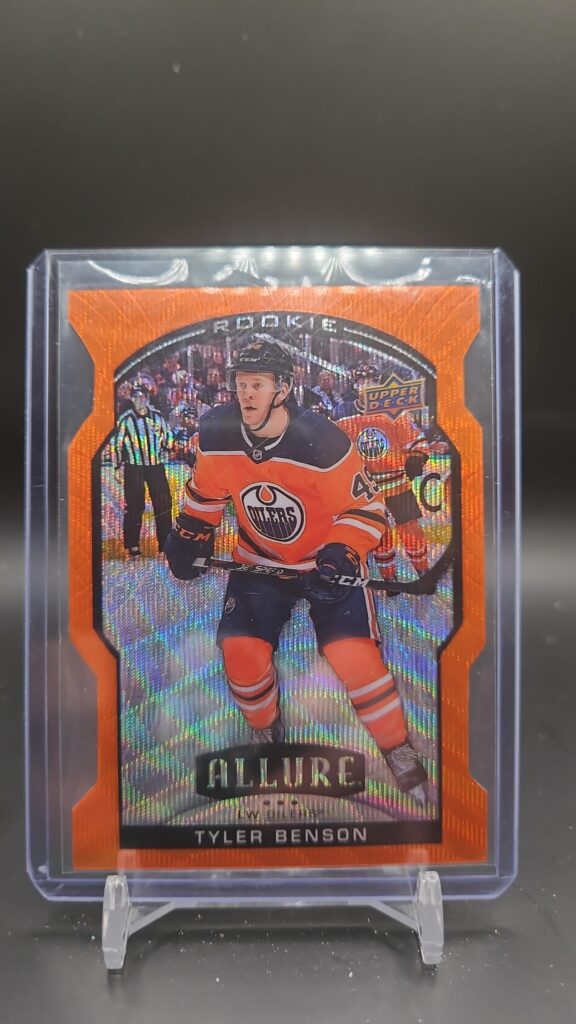
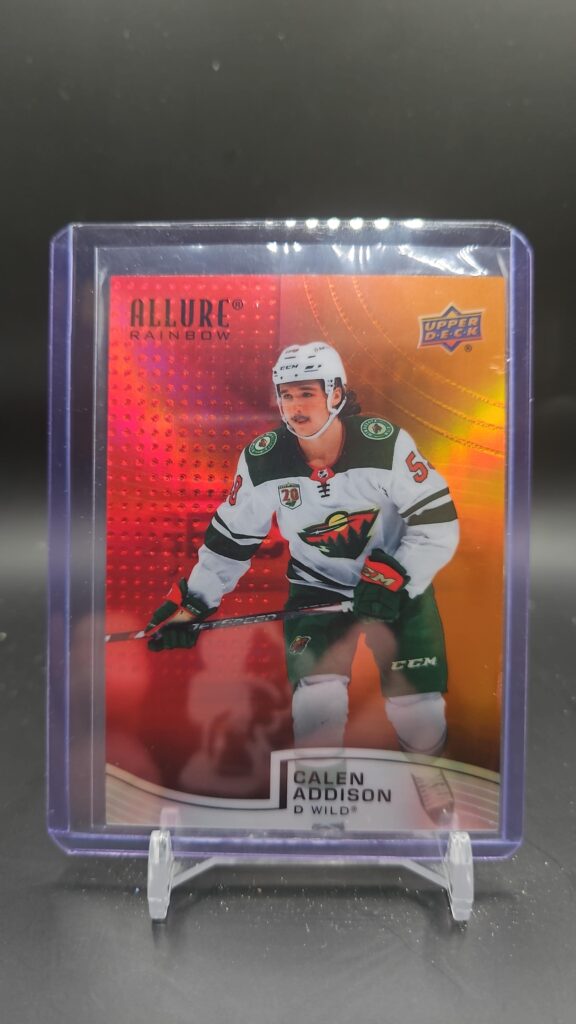
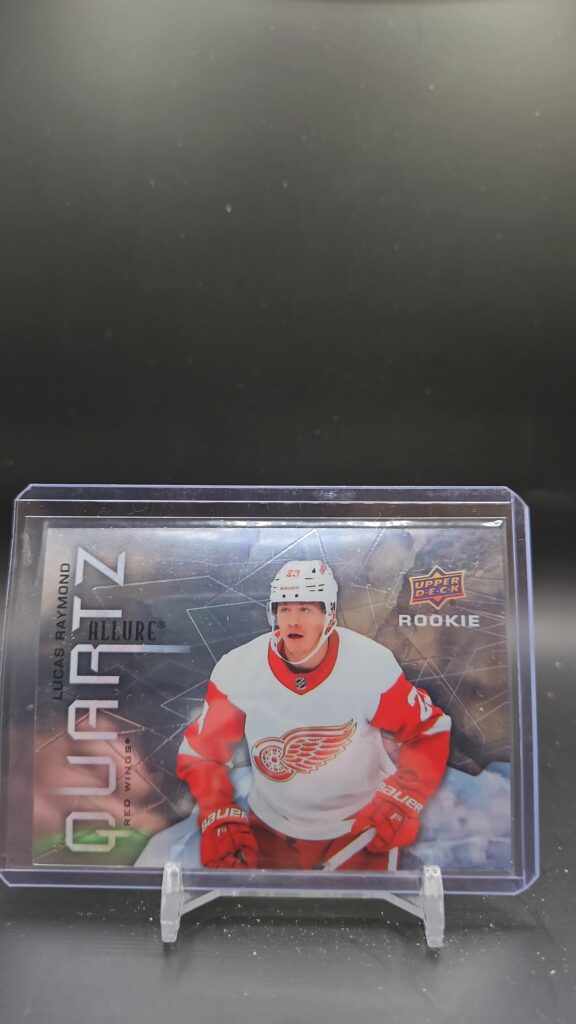
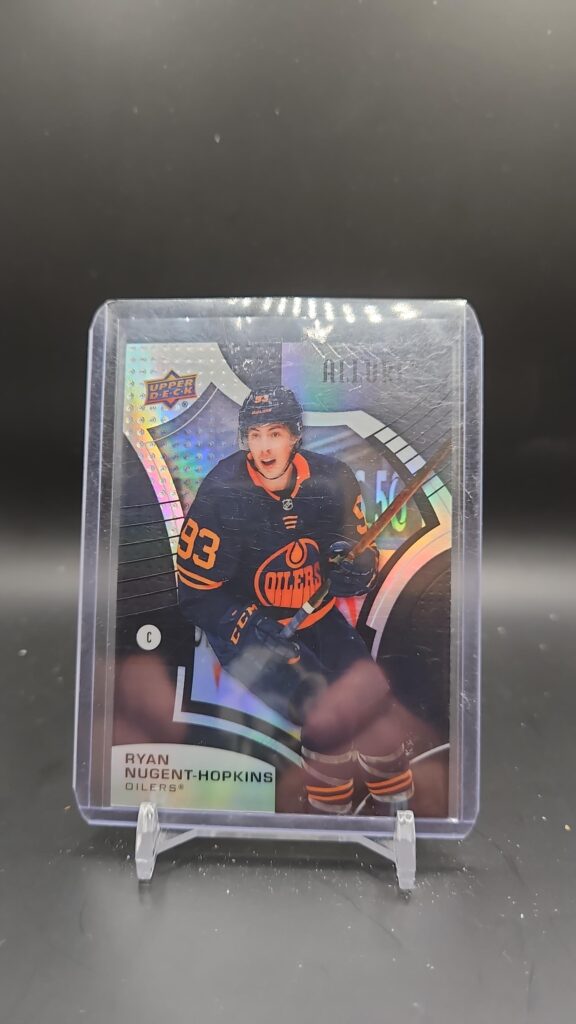
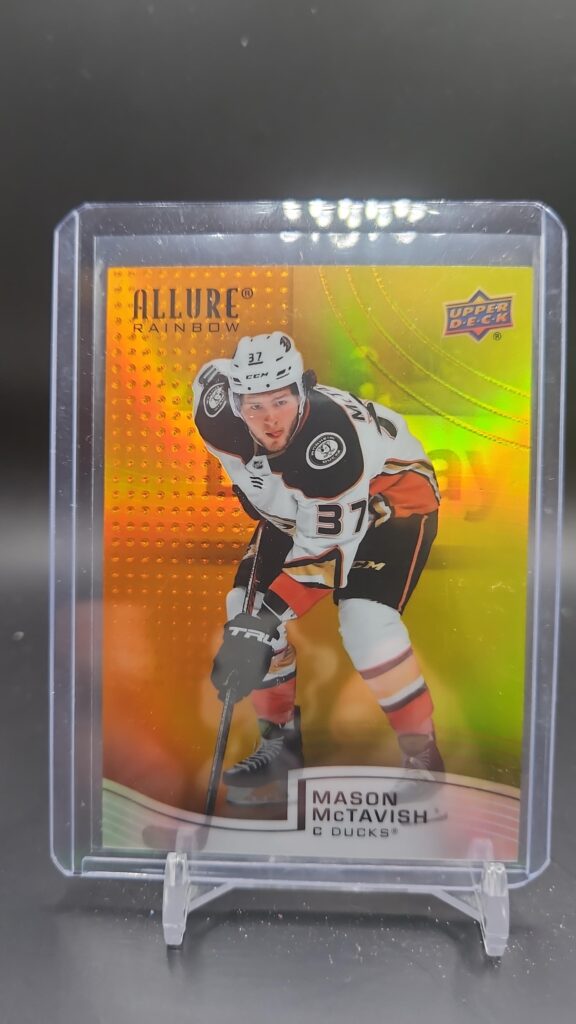
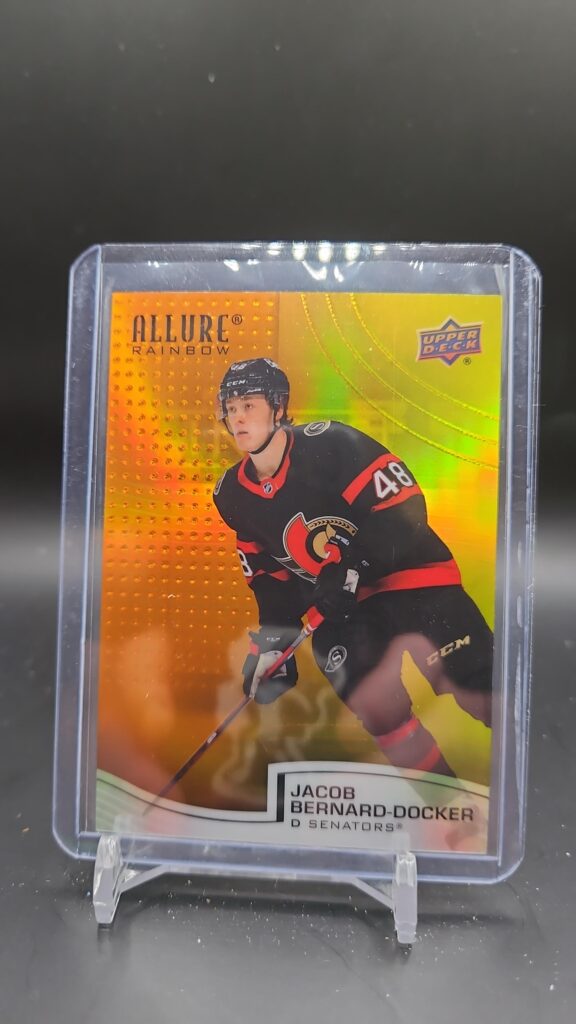
The Upper Deck Allure Hockey Singles category features every individual card from one of Upper Deck’s chromium‑style NHL releases. Allure is known for its bright foil surfaces, colour‑driven parallel system, die‑cut structures, and a checklist that blends rookies, veterans, and stars into a premium mid‑tier product. This category focuses entirely on singles, giving collectors direct access to base cards, rookies, parallels, inserts, die‑cuts, and autograph variations without relying on sealed boxes or unpredictable pack odds. Every card is listed individually so collectors can complete sets, upgrade condition, build colour‑rainbow runs, or target specific players with precision.
Allure singles include the most‑searched card types such as Base, Base Red Rainbow, Base Orange Slice Die‑Cut, Base Yellow Taxi, Base Iced Out, Base Black Rainbow, Base Pink Diamond, Base Green Quartz, Base Blue Line, Base Purple Diamond, Base White Diamond, Double Rainbow, Rainbow Red, Rainbow Gold, Rainbow Green, Rainbow Purple, Rainbow Blue, Rainbow Black, Rainbow Orange, Rainbow Pink, Rainbow Teal, Rainbow Violet, Rainbow Cosmic, Rainbow Galaxy, Rainbow Star, Rainbow Lunar, Rainbow Aurora, Rainbow Eclipse, Rainbow Solar, Rainbow Meteor, Rainbow Comet, Rainbow Orbit, Rainbow Fusion, Rainbow Prism, Rainbow Neon, Rainbow Electric, Rainbow Atomic, Rainbow Ice, Rainbow Laser, Rainbow Etched, Rainbow Embossed, Rainbow Gloss, Rainbow Matte, and Allure autographs. These subsets form the backbone of Allure collecting and represent the highest‑searched terms associated with the product.
This category includes singles from more than forty different hockey players across eras, all unique from your previous categories. Collectors will find names such as Ryan Nugent‑Hopkins, Evan Bouchard, Stuart Skinner, Zach Hyman, Connor Brown, Dylan Holloway, Philip Broberg, Evan Rodrigues, Bowen Byram, Jonathan Drouin, Josh Manson, Miles Wood, Tomas Tatar, Dawson Mercer, Erik Haula, Dougie Hamilton, Vitek Vanecek, Jesper Bratt, Nico Hischier, Jack Hughes, Luke Hughes, Dawson Mercer, Alex Tuch, Dylan Cozens, Peyton Krebs, Devon Levi, Rasmus Dahlin, Owen Power, Tage Thompson, Seth Jarvis, Martin Necas, Brent Burns, Frederik Andersen, Andrei Svechnikov, Pyotr Kochetkov, Mason McTavish, Troy Terry, Trevor Zegras, Jamie Drysdale, Cam Fowler, John Gibson, and Leo Carlsson. These players appear across Allure base, parallels, die‑cuts, and autograph structures, giving collectors a fresh roster of singles to chase.
Collectors enjoy Allure because it blends chromium shine with colour‑tier rarity, die‑cut designs, and rookie‑driven chase value. The product offers a visually striking look that stands out in binders and display cases, while the parallel system provides structured collecting paths for both casual and advanced collectors. Whether you’re building a full Allure rainbow, hunting rookies, or targeting specific players, this category provides complete coverage of Upper Deck Allure Hockey singles.
FAQ
Why do collectors focus on Allure singles instead of sealed boxes?
Singles allow collectors to target specific parallels and rookies directly, and many rely on colour‑tier mapping and chromium‑surface evaluation when building Allure sets.
Are Red Rainbow parallels still considered core Allure cards?
Red Rainbow remains one of the signature Allure parallels, and collectors often use colour‑tier indexing and foil‑pattern comparison when ranking them.
Why are Orange Slice Die‑Cuts so popular?
Orange Slice cards offer a unique die‑cut shape and bright foil finish, and collectors rely on die‑cut‑edge inspection and shape‑pattern consistency to assess condition.
Do Double Rainbow rookies hold long‑term value?
Double Rainbow rookies remain strong because they highlight early‑career players with premium foil, and collectors often use rookie‑tier modeling and debut‑year projection to evaluate them.
Are Yellow Taxi parallels worth collecting?
Yellow Taxi parallels provide a distinct colour identity and strong display appeal, and collectors rely on colour‑contrast grading and foil‑surface auditing to judge quality.
Why do collectors chase Green Quartz and Purple Diamond?
These parallels offer higher rarity and stronger visual impact, and collectors often use rarity‑band verification and foil‑layer calibration when ranking them.
Do Allure autographs matter for player collectors?
Allure autographs provide chromium‑style signatures with colour parallels, and collectors rely on signature‑surface inspection and ink‑flow consistency to evaluate them.
Are Iced Out inserts still popular today?
Iced Out inserts remain desirable because of their frosted foil design, and collectors often use frost‑pattern indexing and surface‑texture evaluation to categorize them.
Why do some collectors build full Allure colour rainbows?
Colour rainbows provide visual consistency and complete rarity coverage, and collectors rely on rainbow‑tier sequencing and parallel‑family mapping to organize them.
Are Allure rookies harder to grade than base cards?
Allure rookies often show foil scratches more easily, and collectors rely on chromium‑surface auditing and edge‑pressure inspection to determine grade.
Do die‑cut Allure cards grade differently than standard cards?
Die‑cuts reveal edge flaws more clearly, and collectors rely on cut‑pattern calibration and shape‑integrity checks when evaluating them.
How can collectors stay organized with so many Allure parallels?
Collectors stay organized by grouping cards by colour tier and rarity, and many rely on multi‑layer checklist indexing and structured chromium‑set tracking.
1 - 16 of 69 results