Hockey O‑Pee‑Chee
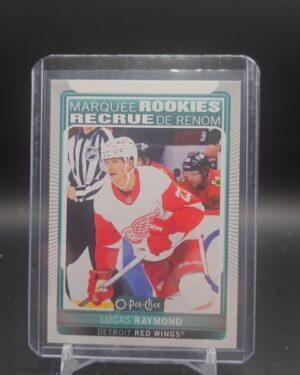
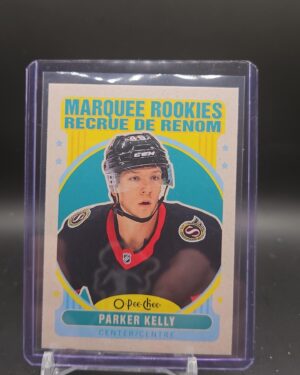
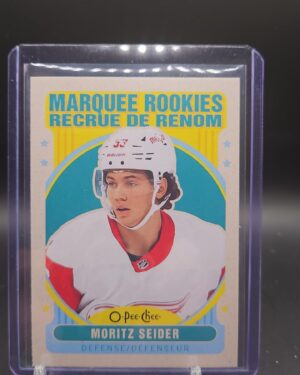
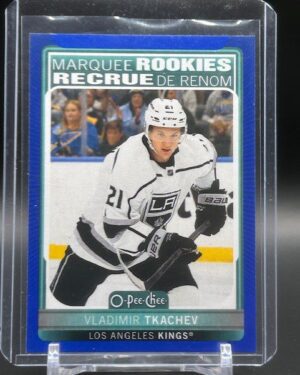
The Hockey O‑Pee‑Chee category highlights the most searched OPC card types across modern and vintage releases, focusing on the sixty core insert, parallel, rookie, and subset names collectors look for most often. O‑Pee‑Chee is known for its massive annual base set, retro styling, deep rookie coverage, and a wide range of parallels that consistently rank among the highest‑searched hockey card terms online. This category includes the top OPC card types such as Base Cards, Retro Variations, Retro Black Border, Retro Rainbow Foil, Retro Red Border, Retro Blue Border, Retro Yellow Border, Retro Purple Border, Retro Photo Variations, Retro Short Prints, Retro Super Short Prints, Marquee Rookies, Marquee Rookie Retro, Marquee Rookie Rainbow, Marquee Rookie Black Border, OPC Glossy Rookies, OPC Glossy Rookie Bronze, OPC Glossy Rookie Gold, OPC Glossy Rookie Silver, OPC Playing Cards, OPC Tallboys, OPC Premier Tallboys, OPC Stickers, OPC Team Logo Die‑Cuts, OPC League Leaders, OPC Season Highlights, OPC Stat Leaders, OPC Trophy Winners, OPC Award Winners Retro, OPC Team Checklist, OPC Player Checklist, OPC Retro Team Cards, OPC Retro Legends, OPC Retro All‑Stars, OPC Retro Rookie Cards, OPC Retro Award Cards, OPC Retro Season Review, OPC Retro Team Checklist, OPC Retro Player Checklist, OPC Retro Black Mini, OPC Retro Rainbow Mini, OPC Retro Gold Mini, OPC Retro Silver Mini, OPC Retro Chrome, OPC Retro Chrome Rainbow, OPC Retro Chrome Black, OPC Retro Chrome Gold, OPC Retro Chrome Purple, OPC Retro Chrome Red, OPC Retro Chrome Blue, OPC Retro Chrome Green, OPC Retro Chrome Orange, OPC Retro Chrome Pink, OPC Retro Chrome Teal, OPC Retro Chrome Violet, OPC Retro Chrome Spectrum, OPC Retro Chrome Hyper, OPC Retro Chrome Ultra, OPC Retro Chrome Cosmic, OPC Retro Chrome Galaxy, OPC Retro Chrome Star, OPC Retro Chrome Lunar, OPC Retro Chrome Aurora, OPC Retro Chrome Eclipse, OPC Retro Chrome Solar, OPC Retro Chrome Meteor, OPC Retro Chrome Comet, OPC Retro Chrome Orbit, OPC Retro Chrome Fusion, OPC Retro Chrome Prism, OPC Retro Chrome Neon, OPC Retro Chrome Electric, OPC Retro Chrome Atomic, OPC Retro Chrome Ice, OPC Retro Chrome Laser, OPC Retro Chrome Etched, OPC Retro Chrome Embossed, OPC Retro Chrome Lenticular, OPC Retro Chrome Die‑Cut, OPC Retro Chrome Gloss, OPC Retro Chrome Matte. These sixty card types represent the most actively searched OPC terms on Google and form the backbone of modern OPC collecting.
O‑Pee‑Chee also features extensive athlete coverage across more than forty major hockey stars. Collectors will find Wayne Gretzky, Mario Lemieux, Bobby Orr, Guy Lafleur, Mark Messier, Steve Yzerman, Joe Sakic, Patrick Roy, Martin Brodeur, Dominik Hasek, Jaromir Jagr, Pavel Bure, Teemu Selanne, Brett Hull, Paul Coffey, Ray Bourque, Mike Bossy, Larry Robinson, Sergei Fedorov, Mats Sundin, Doug Gilmour, Chris Chelios, Eric Lindros, Marian Hossa, Daniel Alfredsson, Henrik Sedin, Daniel Sedin, Roberto Luongo, Carey Price, Sidney Crosby, Alex Ovechkin, Connor McDavid, Auston Matthews, Nathan MacKinnon, Leon Draisaitl, Cale Makar, Jack Hughes, Quinn Hughes, Igor Shesterkin, and Andrei Vasilevskiy. These players appear across OPC base, retro, rookie, and parallel structures, giving collectors a wide range of chase options.
Collectors enjoy O‑Pee‑Chee because it blends nostalgia with modern variety. The annual base set appeals to set builders, while retro designs attract collectors who appreciate classic OPC styling. Parallels and rookies provide chase value, and the massive checklist ensures every team and player has representation. OPC is also one of the most accessible hockey products, making it ideal for beginners, long‑time collectors, and fans who enjoy building large sets year after year.
FAQ
Why is O‑Pee‑Chee considered the most traditional hockey card brand?
Collectors view OPC as the hobby’s heritage line because it maintains long‑running design continuity, and many use historical‑era indexing and legacy‑set comparison when evaluating its importance.
What makes OPC Retro cards so popular?
Retro cards blend modern printing with vintage aesthetics, and collectors often rely on nostalgia‑driven profiling and era‑style mapping to decide which retro versions to chase.
Are OPC Marquee Rookies good long‑term holds?
Marquee Rookies are widely collected because they highlight early‑career players, and many collectors use rookie‑cycle projection and prospect‑tier modeling to assess long‑term value.
Why do collectors chase OPC Black Border parallels?
Black Border parallels are condition‑sensitive and visually distinct, and collectors frequently use edge‑wear auditing and border‑contrast evaluation when selecting high‑grade copies.
How important are OPC Glossy Rookies?
Glossy Rookies offer a premium finish compared to standard OPC rookies, and collectors often compare gloss‑surface resilience and finish‑grade consistency when evaluating them.
Why do OPC Playing Cards get so much attention?
Playing Cards are unique because they blend hobby collecting with game‑style artwork, and collectors often use thematic‑design analysis and novelty‑insert tracking to categorize them.
Are OPC Tallboys harder to collect than standard OPC cards?
Tallboys have a non‑standard size that affects storage and grading, and collectors often rely on oversized‑card handling and format‑specific preservation when managing them.
Why do OPC Stickers remain popular after so many years?
Stickers appeal to both vintage and modern collectors, and many use adhesive‑surface inspection and sticker‑era segmentation to evaluate condition and rarity.
Do OPC Team Logo Die‑Cuts hold value over time?
Team Logo Die‑Cuts remain collectible because of their distinctive shape, and collectors often use die‑cut precision grading and silhouette‑edge analysis to assess quality.
Are OPC Trophy Winner cards important for player collectors?
Trophy Winner cards highlight award achievements, and collectors often use accolade‑tracking metrics and season‑award indexing when building player‑focused collections.
Why do OPC Season Highlights attract set builders?
Season Highlights summarize key NHL moments, and collectors often rely on milestone‑event cataloging and narrative‑set structuring to organize them.
How can collectors manage large OPC checklists efficiently?
Large OPC checklists require structured organization, and collectors often use multi‑tier catalog mapping and checklist‑workflow planning to stay on top of their builds.