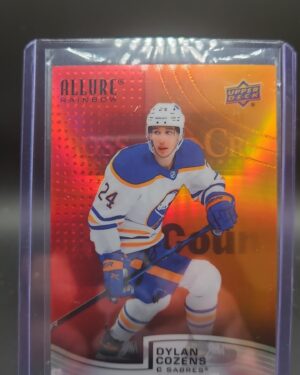
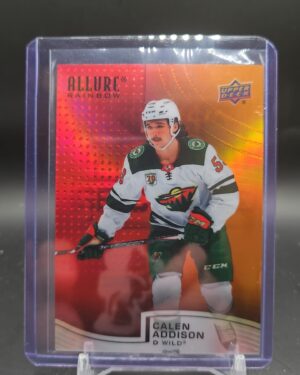
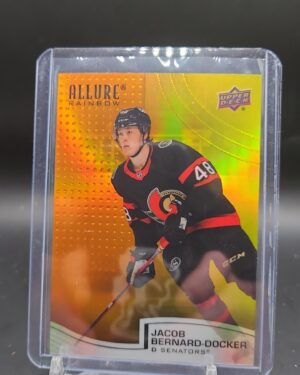
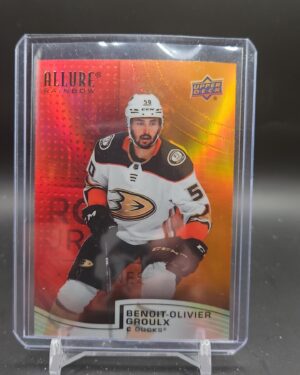
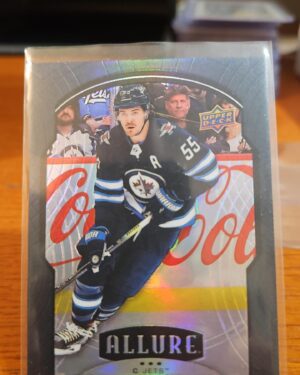
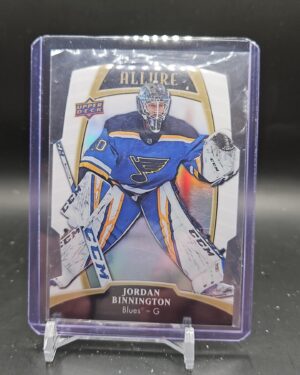
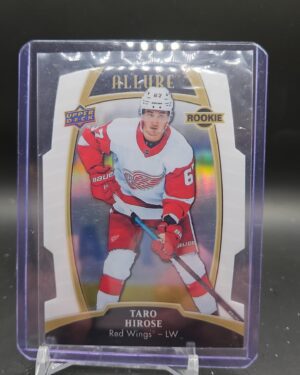
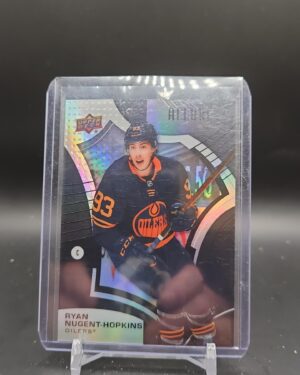
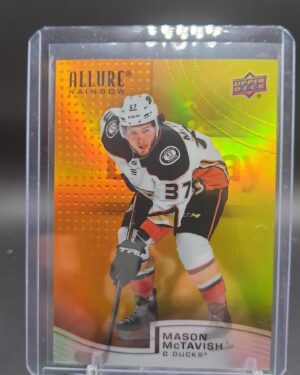
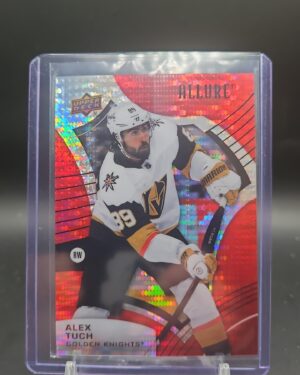
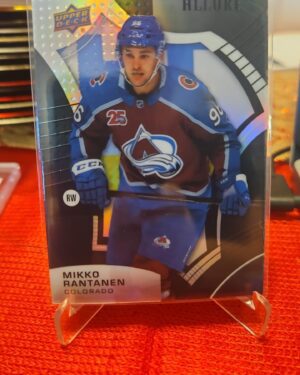
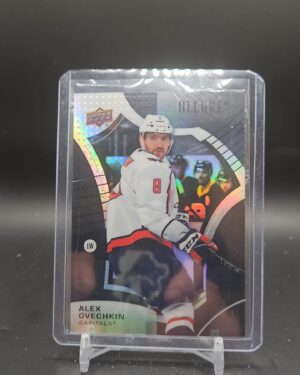
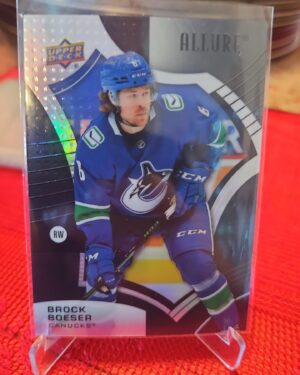
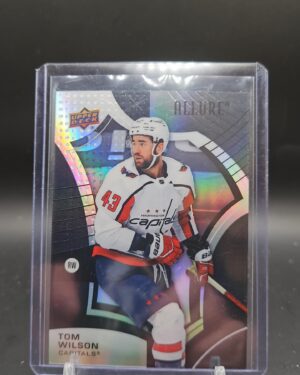
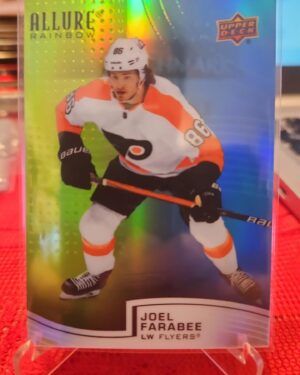
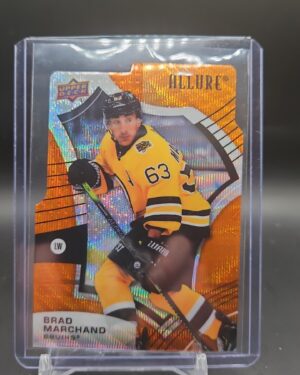
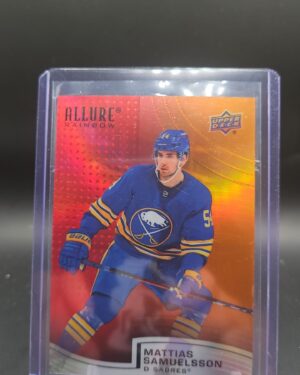
Upper Deck Hockey Allure Parallels Singles
The Upper Deck Hockey Allure Parallels Singles category features every parallel variation from the Allure chromium‑foil lineup. Allure parallels are known for their bright colour tiers, glossy finish, die‑cut shapes, and multi‑level rarity structure that gives collectors a wide range of chase cards across the entire checklist. This category focuses entirely on parallel singles, covering Rainbow, Red Rainbow, Orange Slice Die‑Cut, Yellow Taxi, Black Rainbow, Pink Diamond, Purple Diamond, Blue Line, Green Line, Steel, Double Rainbow, Quartz, Iced Out, Allure Auto Parallels, and all numbered colour‑tier parallels. Every card is listed individually so collectors can complete full colour‑tier runs, build player rainbows, finish Allure master sets, or target specific parallel types with precision.
Allure parallels include the most‑searched NHL players across recent seasons. Collectors will find parallel cards for Connor Bedard, Kevin Korchinski, Juraj Slafkovsky, Cole Caufield, Nick Suzuki, Matthew Knies, Logan Cooley, Adam Fantilli, Luke Hughes, Simon Nemec, Dawson Mercer, Seth Jarvis, Mason McTavish, Trevor Zegras, Jamie Drysdale, Owen Power, Devon Levi, Jack Quinn, J.J. Peterka, Wyatt Johnston, Logan Stankoven, Jake Sanderson, Ridly Greig, Shane Pinto, and Pavel Mintyukov. These players appear across the full Allure parallel structure, giving collectors access to colour‑tier parallels, die‑cuts, acetate‑style Quartz parallels, and autograph‑based parallel variations.
Collectors enjoy Allure parallels because they offer a deep and visually striking chromium parallel ladder. Colour‑tier parallels provide strong display appeal, die‑cuts add unique shapes, and Quartz parallels introduce acetate transparency. Whether you’re building full colour rainbows, hunting specific parallel tiers, completing yearly Allure sets, or assembling a multi‑year Allure binder, this category provides complete coverage of Upper Deck Hockey Allure Parallels Singles.
FAQ
Why do collectors chase Allure parallels instead of base cards?
Allure parallels offer colour‑tier rarity and chromium‑foil finishes, and collectors rely on foil‑layer clarity and surface‑gloss inspection when evaluating them.
Are Orange Slice Die‑Cut parallels harder to grade?
Die‑cuts show edge wear more easily, and collectors rely on cut‑edge inspection and shape‑consistency checks.
Do Quartz parallels hold long‑term interest?
Quartz parallels use acetate transparency, and collectors rely on clarity‑layer evaluation and surface‑cleanliness checks.
Are numbered Allure parallels more desirable?
Numbered parallels provide defined rarity, and collectors rely on serial‑range verification and colour‑tier mapping to determine value.
Do Allure parallels scratch easily?
Chromium surfaces show micro‑scratches more clearly, and collectors rely on angled‑light inspection and gloss‑layer evaluation.
Are Allure parallels required for a full Allure master set?
Parallel tiers complete the full Allure structure, and collectors rely on colour‑tier indexing and set‑completion tracking.
Why are certain Allure parallels more searched than others?
High‑traffic parallels often feature star players or premium colour tiers, and collectors use player‑tier indexing and rarity‑band comparison.
Are Allure Auto Parallels sticker autos?
Most Allure autos are sticker autographs, and collectors rely on signature‑flow inspection and surface‑layer auditing.
Do weaker rookie classes affect Allure parallel interest?
Collectors still build full colour‑tier runs, and many rely on multi‑year chromium binder organization.
How can collectors stay organized with so many parallel types?
Collectors sort parallels by colour tier, numbering, die‑cut shape, and acetate type, using structured Allure binder workflows.